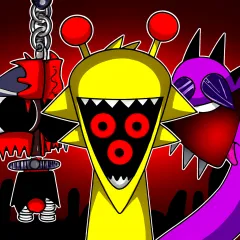
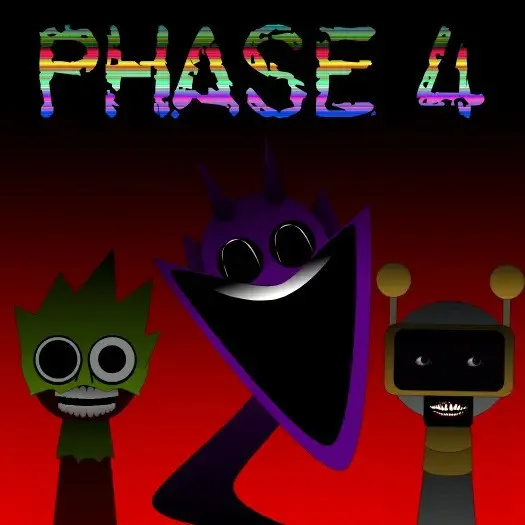
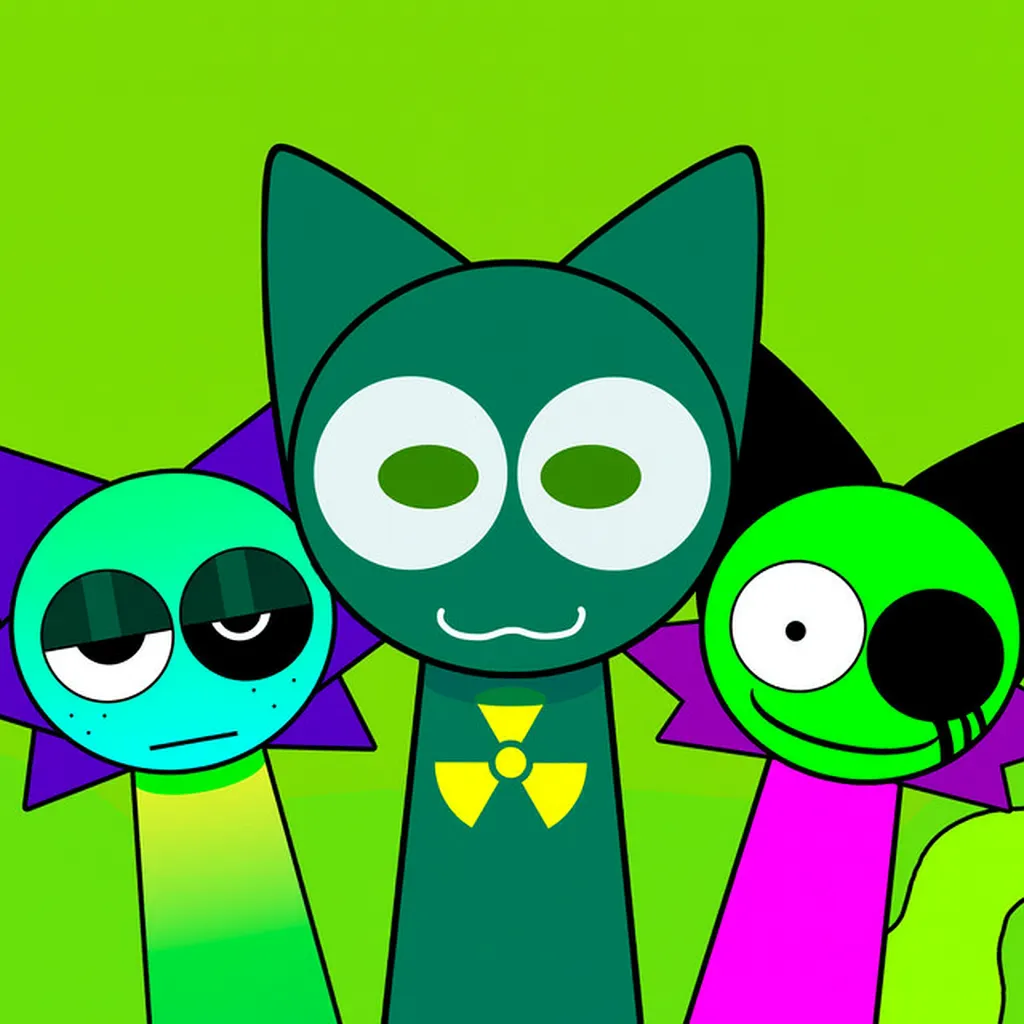
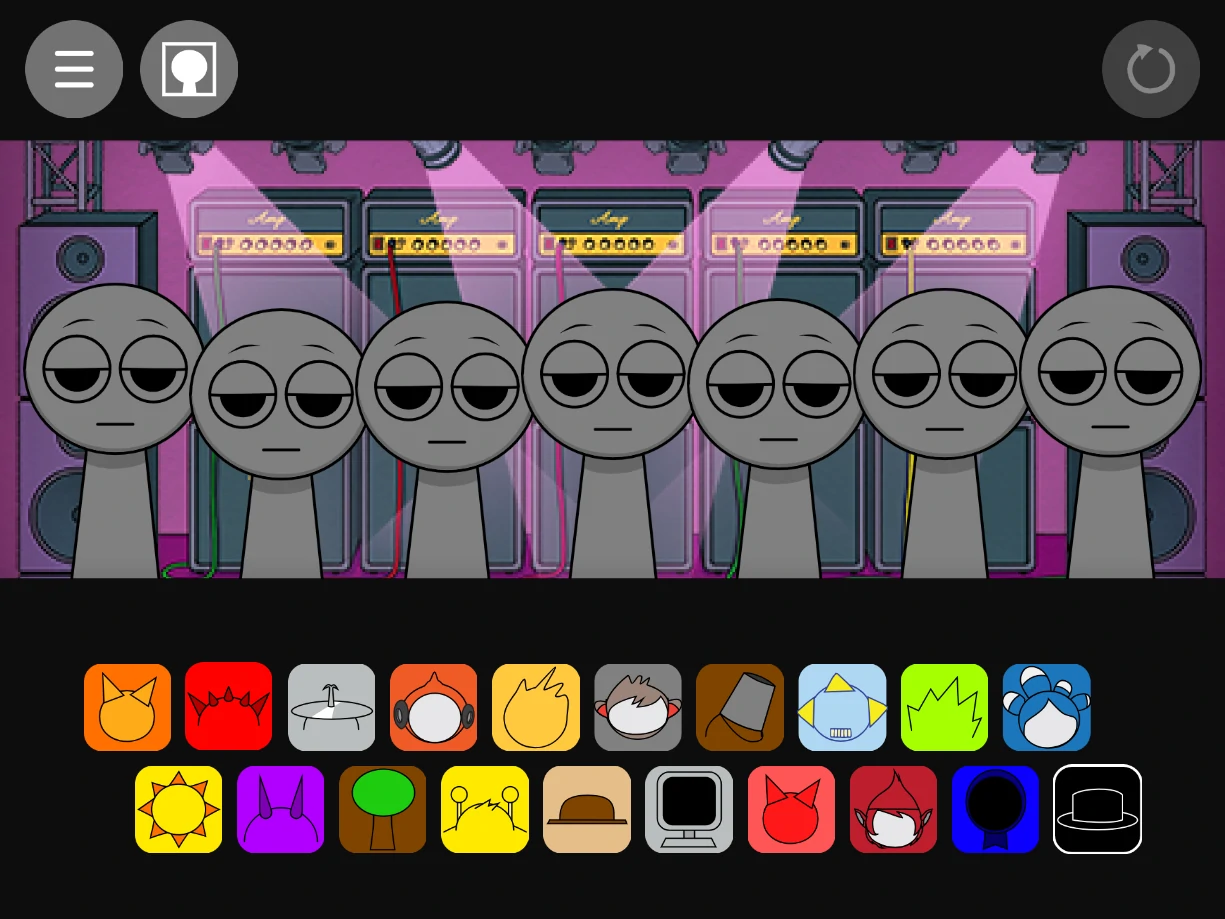
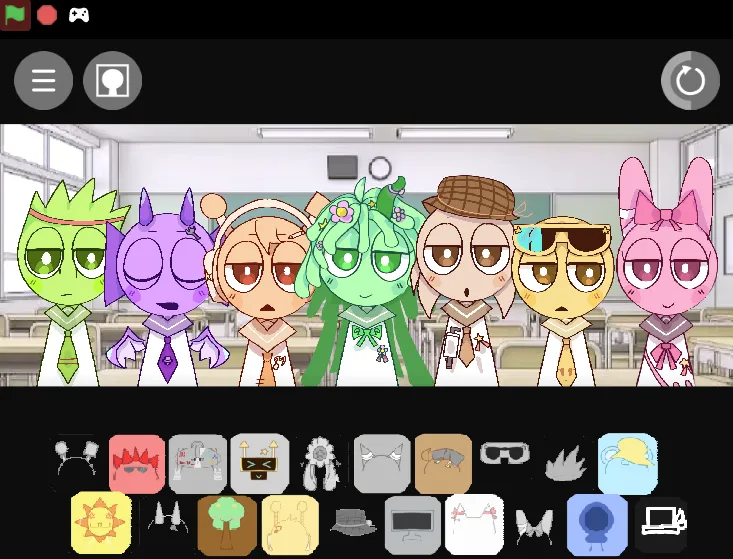
Sprunki Spupil sets you up in a classroom that looks normal at first and progressively stops being one. Nine student characters stand at the back of the room, blinking slowly, waiting. Dragging sound icons onto them transforms each one: colorful school outfits, accessories like ties, ribbons, hats, and glasses appear, and their sounds activate. The track that builds from combining these characters is not the kind of thing you would hear at an actual school performance. Broken bell chimes, distorted giggles, glitch-pop loops, and ambient sounds that seem to be coming from an empty hallway layer over each other into something that sits closer to a haunted broadcast than a classroom remix.
The visual design leans into this. The student characters have a flickering, twitching quality in their animations, and specific character combinations unlock cutscenes that push the classroom setting further into unsettling territory: lights that flicker, chalkboard text that rewrites itself, desks that shift on their own. The lore in Sprunki Spupil is delivered through what you see during these moments rather than through any written explanation, which makes finding the combinations worth the time.
The game runs in the browser on desktop and mobile, no download or account required. Controls are mouse only: drag icons onto characters to activate them, click an active character to remove their contribution.
How to Play Sprunki Spupil
1
Look at all nine characters before placing anything
The nine student characters waiting in the classroom each have a distinct idle animation and a sound that reflects their individual role in a composition. Before dragging anything, take a moment to observe who is available. Some will anchor the rhythm, others carry melody, and a few contribute atmospheric or textural sounds that sit underneath the main mix.
2
Drag icons onto characters to build the track
Drag sound icons from the selection area and drop them onto the waiting characters to activate their loops. Each placement changes the character's appearance and adds their sound to what is already playing. Start with something that gives the mix a rhythmic base and layer from there. The classroom soundtrack shifts noticeably depending on which characters you combine first.
3
Experiment with specific combinations to unlock hidden content
Certain character arrangements in Sprunki Spupil trigger cutscenes that reveal details about the game's twisted school setting. These are brief and easy to miss, so watching the stage closely when you introduce a new combination helps. Swapping one character at a time makes it easier to identify which specific pairing produced a reaction.
4
Remove and replace characters freely to find new sounds
Click any active character to remove their contribution without stopping the rest of the mix. Use this to rotate characters in and out and discover which combinations produce the most interesting results. No two sessions in Sprunki Spupil sound exactly alike because the interactions between specific characters shift the overall texture in ways that are worth mapping out over multiple sessions.
What makes the classroom setting work
The school setting in Sprunki Spupil is doing more than providing a visual backdrop. The nine student characters are designed as a group rather than as nine independent sound sources, and that group dynamic affects how the compositions feel. When only two or three are active, the classroom feels like something is about to start. When most of the characters are running their loops simultaneously, the room feels like it has been taken over by something that used to be a performance and turned into something else entirely.
The accessories and outfit changes that appear when characters receive their icons are part of this. Each transformation is specific to the character and the sound they carry, and seeing all nine in their active state at once produces a visual that matches the audio density. The design communicates what is happening in the mix through the appearance of the students on stage, which gives Sprunki Spupil a feedback quality that rewards players who pay attention to both channels simultaneously.
The sound design and what it is actually doing
Sprunki Spupil builds its audio palette around sounds that are recognizable as school-adjacent but processed in ways that pull them away from that context. Broken bell chimes still sound like bells, but the timing is wrong. The distorted giggles have a melodic structure underneath the distortion. The glitch-pop loops carry enough rhythmic regularity to anchor a composition while still sounding unstable. This tension between the familiar and the wrong is what gives the game its atmosphere, and it is what makes sessions feel different each time even when the same characters are being used.
The layering system rewards players who think about frequency space rather than just adding sounds until the mix feels full. The atmospheric characters contribute content in lower registers that becomes more audible as the denser rhythmic and melodic elements are removed. Working with two or three characters at a time and listening carefully to what each one occupies in the mix produces a clearer sense of how to combine them intentionally, which leads to more interesting results than filling all nine slots immediately and hoping the chaos resolves into something good.
Getting more out of Sprunki Spupil over multiple sessions
The first session in Sprunki Spupil tends to be exploratory: place things, see what happens, find the combinations that produce the most unexpected reactions. That approach works and is genuinely entertaining. The more interesting sessions come later, when you have a mental map of which characters interact in notable ways and can make deliberate choices about the composition you are trying to build.
The hidden cutscenes are one target worth pursuing systematically. Changing one character at a time while watching the stage gives you a reliable method for identifying which specific combination triggered a visual event. The lore that surfaces through these moments adds a narrative layer to what is otherwise a sound-mixing game, and piecing it together across multiple sessions gives Sprunki Spupil a replay depth that is unusual for a browser-based music game.
Sprunki Spupil is a fan-made entry in the Sprunki series, developed independently by community creators. It is inspired by Incredibox and the broader Sprunki universe but takes the concept into a haunted school setting that is entirely its own. To play Sprunki Spupil online free on Sprunky Game, no download or account is needed.
FAQs about Sprunki Spupil
Sprunki Spupil is a fan-made music game set in a haunted classroom. Players drag sound icons onto nine student characters to build layered compositions using broken bell chimes, distorted vocals, glitch-pop loops, and ambient sounds. Specific character combinations unlock cutscenes that reveal details about the game's twisted school lore.
Yes. The full game runs in your browser at no cost. No download, no account, and no payment required.
There are nine student characters waiting in the classroom. Each one has a distinct sound role and transforms visually when activated. You can combine any number of them simultaneously to shape the composition.
Specific character combinations trigger brief cutscenes showing elements of the game's haunted school setting. The easiest way to find them is to change one character at a time and watch the stage closely after each swap. The community has documented a number of these combinations if you want a starting point.
The audio palette includes broken bell chimes, distorted giggles, glitch-pop loops, and atmospheric sounds that sit underneath the main mix. The sounds are school-adjacent but processed in ways that pull them toward something more unsettling. Every character contributes a distinct layer that changes the texture of the overall composition.
The game includes options to save your track and continue the loop. If those are not available in the current build, screen recording is the standard way the community captures and shares sessions.