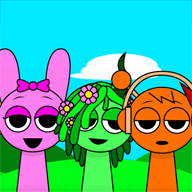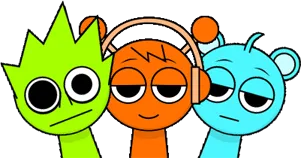


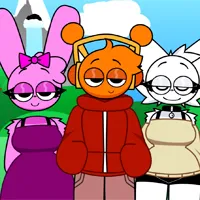
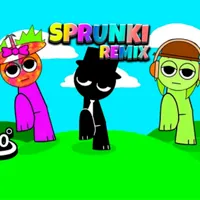




What sold me on sprunki superhero is how fast the board reads as a costume remix. You are not learning a new rulebook. You are looking at the same drag and drop mixer with every sprunki character dressed like they just walked out of a bright comic panel. Cape looks sit next to visor and tech guardian looks. The tray feels like a squad select screen more than a toy shelf.
That visual job matters when I sort the catalog. Kids can tell this is not a scare flip. Adults coming off a grim phase get an obvious palette reset. The animations stay busy on purpose. Heroes react to the beat you build, so a tight stack looks like a short action scene and a messy stack looks like the squad talking over each other. I use that as a mixing hint. If the stage looks chaotic, the audio usually is too.
Each hero still maps to a musical job. Heavy bass. Sharp percussion. Melodic synth. Effects. Vocals. You do not need a labeled mixer channel to hear it. Drop a bulky hero when you want weight. Drop a sleeker costume when you want a hook. The fun is hearing whether those superhero personas actually translate into rhythm, or whether you just built a loud poster.
I also watch how the squad occupies space. Some costumes take the middle of the stage like a lead singer. Others sit better as backup. If two capes try to own the same beat, I pull one off even if both look great in a screenshot. Looks are the invitation. Loops are the test. Sprunki superhero is honest about that split once you stop treating every icon as a collectible and start treating it as a sound.